
How India is Leading the Post-Pandemic Global Manufacturing Recovery
The coronavirus (COVID-19) pandemic will be remembered as one of history's most significant black swan events. It is even said that COVID-19 in the year 2020 created more economic and social disruption than the Global Financial Crisis of 2008–2009 and possibly even the Great Depression of the 1930s.
A worldwide health crisis that came with COVID-19 resulted in supply chain delays, travel restrictions, and widespread lockdowns.
Businesses have been forced to close, jobs have been lost, and economies have experienced a significant contraction as a result. People have been severely impacted; many have experienced mental health issues, job insecurity, and financial difficulty.
Besides, the epidemic has exposed weaknesses in international systems, pointing to a need for increased preparedness and resilience. The government and international organisations carry such a huge burden of restoring economies, protecting lives, and mitigating the long-term impact of the crisis.
Let's learn, amongst all this, how India has become a reliable partner post-pandemic, supporting global supply chains and driving economic recovery through manufacturing.
India’s strategic position post-pandemic
Beyond the unprecedented health impact, the COVID-19 pandemic has been catastrophic for the global economy and businesses, as it distressingly disrupted the supply chain for manufacturing and GVCs through the disruption of several stages of production in numerous locations across the globe.
In addition, the pandemic has caused the fast-tracking of already underway, more profound changes in GVCs fuelled by the convergence of three megatrends: emerging technologies, environmental sustainability imperatives, and a reconfiguration of globalisation.
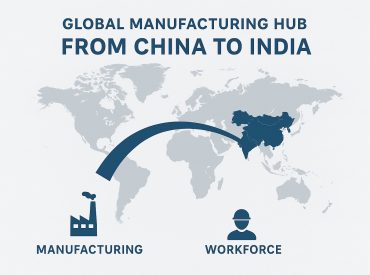
India, taking advantage of such changes, positioned itself as a stable alternative to established manufacturing centres. The country became a strong contender in the global manufacturing landscape by its strong policy intervention and other inherent advantages:
- Emerging technologies: India has used automation, artificial intelligence, and IoT to modernise its manufacturing processes. With the development of these technologies, India has been able to increase efficiency, reduce production costs, and hence give higher quality while being competitive globally.
- Sustainability Focus: Understanding the rising interest in environmental sustainability, India has sharpened its strategy into renewable energy-driven manufacturing and fundamentally environmental materials and waste management systems. The National Electric Mobility Mission Plan by the government reflects how Indian industry is positively moving toward greener industrial ecosystem.
- Globalisation reimagined: This has left India as a diversified, stable, and scalable alternative for companies to reevaluate their reliance on single-country supply chains. Strategic trade agreements - as well as government programs like the Production-Linked Incentive (PLI) schemes - have further escalated the attractiveness of India as a manufacturing destination.
The structural transformations thus accompany unique demographic advantages for the country, including a large, young workforce and a fast-growing middle class. These changes will ensure that India transforms itself both to meet the post-pandemic world and to cement growth and resilience in manufacturing in the long term.
Now, moving forward, let's talk about the government initiatives driving this sector forward.
Government Initiatives Driving Manufacturing Growth
To increase manufacturing and further integrate the country into international supply chains, the Indian government has launched several focused efforts.
Make in India 2.0:
The revamped "Make in India" campaign aims at priority sectors such as electronics, pharmaceuticals, automobiles, and textiles. Through streamlined regulations and fiscal incentives, the initiative encourages both domestic as well as foreign investment in manufacturing.
PLI Schemes:
The Production-Linked Incentive (PLI) Schemes have been a significant catalyst for attracting global manufacturers. The direct benefit is going to companies in the sectors of semiconductors, electronics, and solar equipment; hence, India will become capable of competing with established global hubs.
Infrastructure Development:
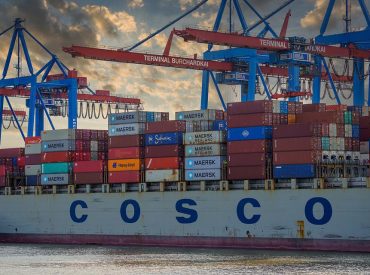
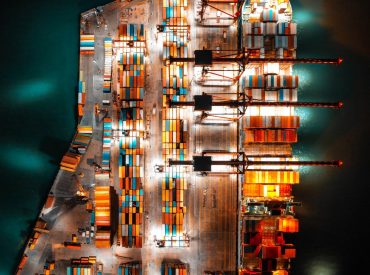
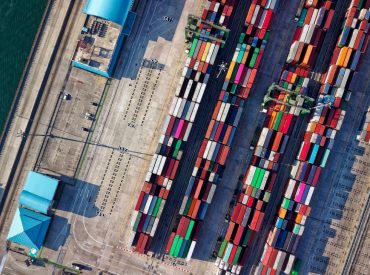
Heavy investments in infrastructure projects by a freight corridor, port modernisation, and industrial zones enhance the logistics capabilities of India, reduce costs, and assure timely delivery.
Digitally enabled manufacturing push:
Initiatives like Digital India and Industry 4.0 are promoting digital transformation among SMEs in embracing advanced manufacturing technologies, further adding strength to India's manufacturing backbone.
Key sectors driving growth
India’s manufacturing revival is noticeable in these key areas:
- Electronics Manufacturing: With manufacturing giants like Apple, Samsung, and Foxconn setting up shop, India is rapidly emerging as the global hub for electronics. Subsidies from the government, plus a huge spurt in consumer demand in the country, have spurred this sector.
- Automotive and Electric Vehicles (EVs): India is the world's fourth-largest automotive market. It is also an emerging leader in electric vehicle manufacturing. Policies such as Faster Adoption and Manufacturing of Hybrid and Electric Vehicles (FAME) are driving this change.
- Pharmaceuticals and Biotechnology: India is often referred to as the "pharmacy of the world." The Indian pharmaceutical industry has responded to the demand globally for more affordable medicines and vaccines post-pandemic, offering significant opportunities.
- Renewable Energy Equipment: As the world shifts to green energy, India has become a significant player in manufacturing solar panels and wind turbines to help achieve global environmental sustainability.
The Road Ahead: India’s path to global leadership
To maintain its reputation as a leader in the global market in the post-pandemic recovery of global manufacturing, India must follow a structured approach:
- Focus on innovation: Investment in research and development with the best technologies brings transformative change in India's manufacturing sector.
- Strengthen global partnerships: Strategic trade agreements with key nations to secure India's place in global value chains.
- Promote Sustainability: Innovate to encourage the use of renewable energy sources and environmentally friendly practices so that Indian manufacturing acts as a benchmark on sustainability.
- Empower SMEs: Credit access, skill training, and technology upgrade should be provided for small and medium enterprises. They are at the back end of India's manufacturing base.
Conclusion
The post-pandemic world has given rise to both the challenges and opportunities for the global manufacturing sector. The proactive approach, strategic efforts, and economic advantages of India have put it in a strong position to spearhead the recovery process. By tackling current issues and capitalising on its benefits, India has the potential to emerge as a global manufacturing powerhouse, transforming global supply networks and establishing new benchmarks for inventiveness and resilience.
Amid this, organisations like Refteck Solutions make a very significant impact on efficient and smooth operations in different sectors. Being an established specialist engineering services partner, Refteck Solutions assists large-scale organisations within the process industry sector in their moves to transcend ancient supply chains.
Their expertise allows businesses to change with the evolving challenges and take up opportunities in the dynamic landscape of manufacturing.
So get in touch with them to learn how they can assist you in your business operations.

Post-pandemic Recove...

Oil and Gas Procurem...

Supporting Global De...
A Premier Engineerin...