
Surviving the Crisis: How Oil and Gas Supply Chains Can Thrive Through Strategic Partnerships
The COVID-19 situation has severely affected oil and gas operators. The border closures and worldwide lockdowns have limited the capacity of oilfield services, which are still recovering from the consequences of collapsing oil prices. Most oil and gas companies are taking measures to cut down their capital and operating expenditures, but these conventional approaches risk destroying crucial industry capacities and impairing operators' ability to sustain output. 


Oil and Gas Supply Chain Challenges
Even if companies survive the current era, they may face the need to forcefully reduce oil prices. The distressed scenario could drive large oil and gas companies to bankruptcy, leading to shutdowns. The oil and gas supply chain faces a range of challenges, amplified by recent global events and market disruptions. From fluctuating oil prices and border closures to the need for technological adoption, the supply chain is undergoing a critical transformation. Some of the key challenges are:Supply Chain Bottlenecks:
Delays and inefficiencies in procurement and logistics have been exacerbated by the pandemic, leading to increased operational costs and project delays.Dependence on Traditional Models:
Many companies still rely on conventional supply chain models that lack the agility to adapt to new market conditions. This resistance to change hampers the ability to implement innovative solutions and digital tools.Talent Shortages:
The industry’s aging workforce and the lack of new talent with specialized supply chain skills pose a significant risk. Developing the right talent to manage procurement and supply chain operations is as crucial as investing in technological and operational advancements.Mitigating Strategies
In pursuit of finding a sustainable cost for near and long-term profitability, the supply chain and OFSE companies have decided to now work in cooperation. The supply chain in the oil and gas industry has to accept new contracting models. The true collaboration between the oil and gas industries will help them to work in a balanced share of risk and reward, resulting in the creation of effective strategies for the supply chain management. Here are the topmost effective oil and gas supply chain strategies to adapt to current distressed situations.Cost reduction strategies
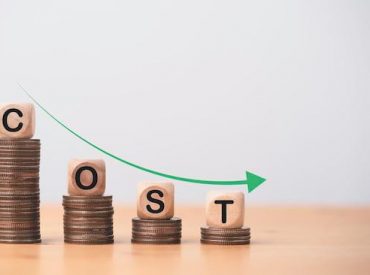
This industry, known to be fat and comfortable with high pricing, has been shocked by the cost lowering that is necessary to meet declining profits. Optimising the costs will be a strategic supply chain management trick that will rediscover the spirit of efficiency in the oil and gas industry. Process optimisation through implementation of lean management principles and use of better horizontal drilling methods will be used for operational efficiency. Techniques such as mega fracking, in which drillers inject a significant amount more particles (sand) into their wells, combined with longer wells with more frac stages will be used to lower the cost per barrel. The use of strategic sourcing and digital transformation will help achieve favourable costs, streamline processes, reduce errors, and enhance visibility.Vertical Integration
Bringing various supply chain functions in-house can reduce reliance on third-party contractors. Currently, many intermediaries add complexity and fragment the supplier base. With integrated offers that cut down coordination expenses, some OFSE businesses are now bringing in-house procurement services. As a consequence, this strategy may save 30% of the money.Service Models and New Equipment
Some businesses are able to experience fresh growth thanks to sustained investment in innovative technologies. The low price of oil today has sparked a renewed interest in efficiency, highlighting emerging technologies that can increase efficiencies - a modest investment cost. In order to increase productivity, gain business, and contribute to the creation of new business and revenue models, procurement consulting firms should think about investing in such skills and expanding their usage of digital technology in general. Although commonly used elsewhere, the strategic sourcing in supply chain management has been hesitant to adopt digital approaches, which is obviously an area of great promise.New Revenue Models
Adopting new revenue models to the OFSE industry has proved advantageous, with notable involvement in project finance and better contracts that mix services and equipment. This is where collaboration has shown great promise. By implementing Long-term Partnerships to facilitate better pricing structures & shared risks, and Flexible Contract Models that blend services and equipment to optimize expenditures can help lower operators' cost bases and requirements for investment in challenging times, providing greater flexibility. Oil and gas companies will have to carry additional capital costs as a result, but it may also result in a steadier income flow.Supply Chain Market Intelligence
Effective supply chain procurement strategies help businesses choose the ideal markets to buy from, the best way to negotiate a price, and the benchmarks and objectives that will give them a competitive edge.Find the critical procurement categories
In order to do this, it is necessary to determine the prices and sourcing choices available along the supply chain for each category and the applicable actions (e.g., seeking new suppliers, changing specifications, altering contract terms).Conduct supply chain bottleneck assessment
Goal for a supply chain fundamental shift that could entail finding new suppliers.Create custom-fit oil and gas procurement strategies
It includes suppliers early on in the process and offers more clarity. Additionally, carry your plan out through implementation and into operations.Establish the infrastructure needed to support procurement and supply chain management
These rare abilities are in high demand right now. In the coming years, developing the proper talent in this area will be just as crucial as it is the most crucial technological and operational ones.Workforce Management
Since there is a sever talent shortage in the industry, companies can invest in workforce management techniques to reduce operational errors and enhance productivity. Another technique would be to leverage new technology for remote monitoring and operations as it can help reduce travel and logistics costs.Conclusion
The future of strategic supply chain management in the oil and gas industry is being rapidly redefined, with COVID-19 accelerating the need for a more distributed and resilient global supply chain. In this era of low oil prices, enhancing supply chain resilience through effective cost management and fostering strong collaborative supplier relationships are crucial for maintaining output and reducing expenses. By implementing robust cost reduction strategies and prioritizing collaboration, companies can navigate current market challenges, improve profitability, and position themselves for future growth. As firms adopt sophisticated supplier surveillance systems and best-in-class supply chain practices, their ability to adapt to market dynamics while investing in efficiency, innovation, and cooperative strategies will be key to thriving in an increasingly competitive landscape.
Post-pandemic Recove...
Apr 6, 2021

Oil and Gas Procurem...
Apr 25, 2021

Supporting Global De...
Jun 7, 2021
A Premier Engineerin...
May 20, 2022

A Comprehensive Guid...
May 24, 2022